Tracing the Roots of "Samrub Thai": The Art of Dining That Conceals Centuries of Wisdom and History
Last updated: 18 Dec 2025
1929 Views
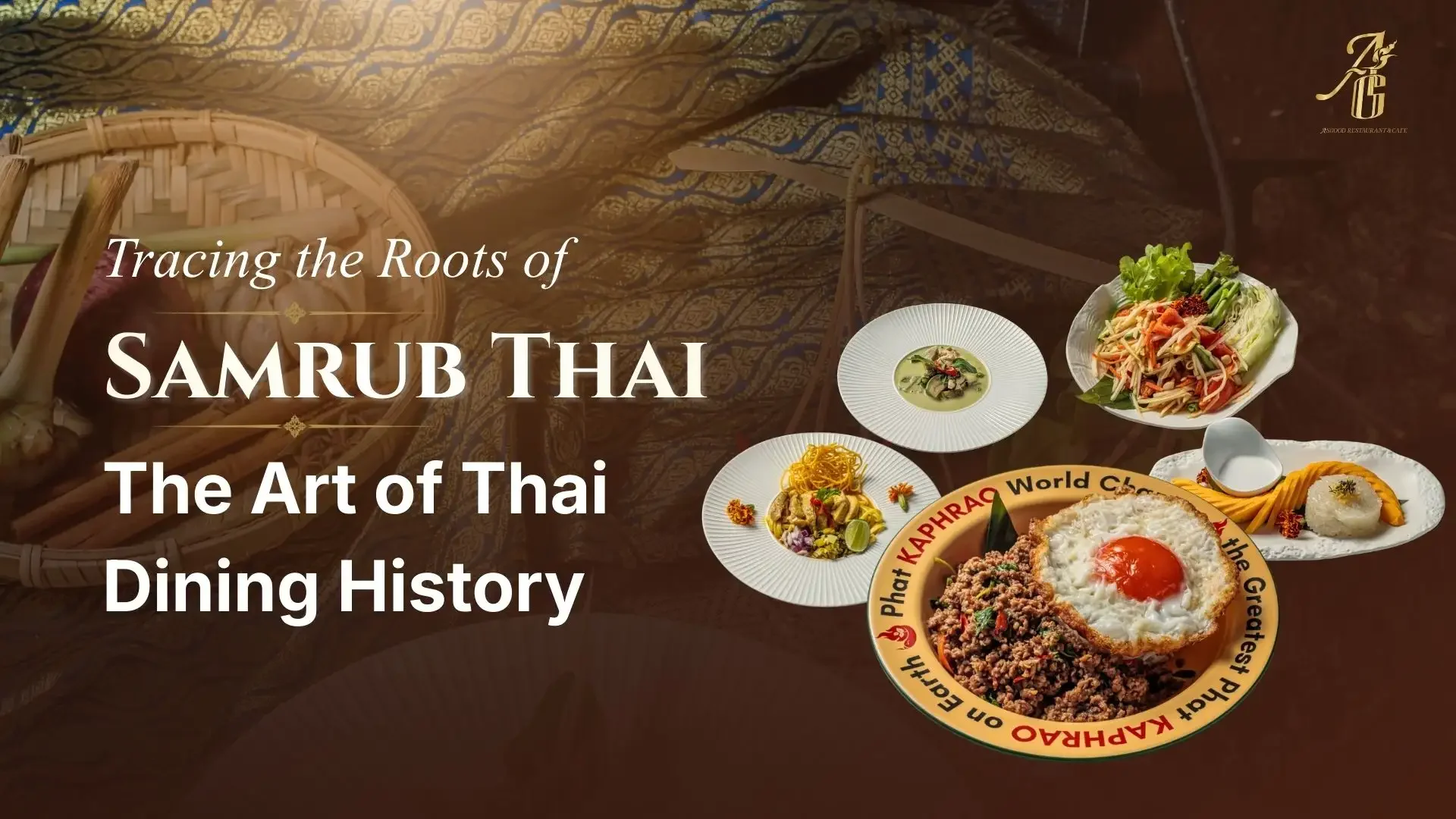
When Thai cuisine is mentioned, many people think of bold flavors like tom yum goong or pad Thai. However, the true essence of Thai culinary culture lies not in single dishes, but in "samrub-style dining" (Thai Samrub).
Arranging a Samrub is not merely about bringing foods together, it is a social innovation and wisdom that reflects Thailand's long history, from sitting in circles eating rice in the Ayutthaya period to the refined elegance within palace walls. This article will take you deep into the history and philosophy behind "Thai Samrub" that you may never have known before.
Key Highlights
1.The Science of Balance: The Philosophy Behind Thai Samrub
2. As Good Restaurant: "Thai Samrub" Reimagined on Koh Phi Phi
3. Evolution Timeline: From "Wong Khao" (Rice Circle) to "Samrub"
4. More Than FullnessIt's About Relationships
The Science of Balance: The Philosophy Behind Thai Samrub
The essential heart of Samrub arrangement is "harmony" in both flavor and nutritional dimensions. Ancient Thai people believed in "food as medicine." Therefore, Samrub arrangement must include a complete range of 5-8 flavors (sour, sweet, rich, salty, spicy, bitter, astringent, bland) to balance the elements within the body.
Standard Components in 1 Samrub
To achieve harmony when eaten with steamed rice, Thai Samrub typically consists of:
The Centerpiece: The heart of the meal a "dipping condiment" such as nam prik (chili paste) or lon (thick coconut-based dip)
Gaeng (Soup/Curry): Usually includes both spicy curry and mild soup to aid digestion
Accompaniments: Fresh vegetables, boiled vegetables, or preserved items (such as crispy catfish or salted eggs) to offset spiciness
Dry Dishes: Stir-fried, deep-fried, or grilled foods
As Good Restaurant: "Thai Samrub" Reimagined on Koh Phi Phi
This philosophy of balance and respect for Samrub Thai culture is the driving force behind the kitchen at AS GOOD RESTAURANT - Phi Phi Island. We take pride in being a provider of the Best Authentic Thai Cuisine in Phi Phi Island by presenting authentic Thai food that has been "reimagined for the modern era."
The Set Menu at As Good Restaurant presents food in "traditional Samrub style," celebrating the art of dining where "heritage, flavor, and artistry come together in perfect harmony."
An Experience Driven by Chef's Philosophy
The dining experience here is presented as "a sensory journey that honors Thailand's culinary legacy" with exquisite craftsmanship and deep cultural respect.
Every dish in As Good Restaurant's Samrub follows Chef Mod's principles, emphasizing the essence of Thai culture through three main elements: balance, authenticity, and thoughtful presentation, making each meal "a story of tradition reborn."
If you wish to experience the depth of Thai Samrub, featuring seasonal Thai delicacies and thoughtful presentation in one of Koh Phi Phi's most complete Samrub formats...
Evolution Timeline: From "Wong Khao" (Rice Circle) to "Samrub"
1. Ayutthaya Era: Natural Ways and Hand-Eating
In the past, Thai people sat in circles eating rice on the floor or low platforms, emphasizing simplicity. Main ingredients were fish and rice. La Loubère's records noted that Siamese people ate rice as their staple food, with side dishes of dried fish, salted fish, and curries, using "the right hand" for eating.
2. Early Rattanakosin Era: Refinement and International Influences
This era saw increased food decoration and the adoption of Chinese and Persian cultures, reflected in literary masterpieces such as "Kap He Chom Khruang Khao Wan" (Poetic Ode to Savory and Sweet Dishes) from the reign of Rama II, which mentioned dishes like massaman or saeng wa, demonstrating the complexity of Samrub arrangements that were becoming more cosmopolitan.
3. Golden Age of King Rama V's Reign: Birth of "Thai Samrub" Standards
This was the most significant transitional period, when Siam had to modernize and adopt Western culture. Spoons and forks began replacing hand-eating. Most importantly, the creation of the cookbook "Mae Khruaa Hua Pa-ak" by Thanphuying Plian Phasakorawong (1908 CE) formally established "samrub" arrangement standards and clearly defined accompanying side dishes.
More Than Fullness It's About Relationships
"Samrub" dining is thus not just about satisfying hunger, but is a mirror reflecting Thai ways of life. The most important implication is "gathering in a circle," which makes that meal a time for building family relationshipsthe strong foundation of Thai society that continues to this day.
Contact Us:
As Good Restaurant Phi Phi Island
WhatsApp: (https://line.me/R/ti/p/@201ycxwe)
Facebook Page: https://www.facebook.com/AsGoodRestaurant
Instagram: https://www.instagram.com/asgood_restaurantandcafe/
TikTok: https://www.tiktok.com/@asgoodrestaurantandcafe
YouTube: https://www.youtube.com/@as-goodrestaurant
Arranging a Samrub is not merely about bringing foods together, it is a social innovation and wisdom that reflects Thailand's long history, from sitting in circles eating rice in the Ayutthaya period to the refined elegance within palace walls. This article will take you deep into the history and philosophy behind "Thai Samrub" that you may never have known before.
Key Highlights
1.The Science of Balance: The Philosophy Behind Thai Samrub
2. As Good Restaurant: "Thai Samrub" Reimagined on Koh Phi Phi
3. Evolution Timeline: From "Wong Khao" (Rice Circle) to "Samrub"
4. More Than FullnessIt's About Relationships
The Science of Balance: The Philosophy Behind Thai Samrub
The essential heart of Samrub arrangement is "harmony" in both flavor and nutritional dimensions. Ancient Thai people believed in "food as medicine." Therefore, Samrub arrangement must include a complete range of 5-8 flavors (sour, sweet, rich, salty, spicy, bitter, astringent, bland) to balance the elements within the body.
Standard Components in 1 Samrub
To achieve harmony when eaten with steamed rice, Thai Samrub typically consists of:
The Centerpiece: The heart of the meal a "dipping condiment" such as nam prik (chili paste) or lon (thick coconut-based dip)
Gaeng (Soup/Curry): Usually includes both spicy curry and mild soup to aid digestion
Accompaniments: Fresh vegetables, boiled vegetables, or preserved items (such as crispy catfish or salted eggs) to offset spiciness
Dry Dishes: Stir-fried, deep-fried, or grilled foods
As Good Restaurant: "Thai Samrub" Reimagined on Koh Phi Phi
This philosophy of balance and respect for Samrub Thai culture is the driving force behind the kitchen at AS GOOD RESTAURANT - Phi Phi Island. We take pride in being a provider of the Best Authentic Thai Cuisine in Phi Phi Island by presenting authentic Thai food that has been "reimagined for the modern era."
The Set Menu at As Good Restaurant presents food in "traditional Samrub style," celebrating the art of dining where "heritage, flavor, and artistry come together in perfect harmony."
An Experience Driven by Chef's Philosophy
The dining experience here is presented as "a sensory journey that honors Thailand's culinary legacy" with exquisite craftsmanship and deep cultural respect.
Every dish in As Good Restaurant's Samrub follows Chef Mod's principles, emphasizing the essence of Thai culture through three main elements: balance, authenticity, and thoughtful presentation, making each meal "a story of tradition reborn."
If you wish to experience the depth of Thai Samrub, featuring seasonal Thai delicacies and thoughtful presentation in one of Koh Phi Phi's most complete Samrub formats...
Evolution Timeline: From "Wong Khao" (Rice Circle) to "Samrub"
1. Ayutthaya Era: Natural Ways and Hand-Eating
In the past, Thai people sat in circles eating rice on the floor or low platforms, emphasizing simplicity. Main ingredients were fish and rice. La Loubère's records noted that Siamese people ate rice as their staple food, with side dishes of dried fish, salted fish, and curries, using "the right hand" for eating.
2. Early Rattanakosin Era: Refinement and International Influences
This era saw increased food decoration and the adoption of Chinese and Persian cultures, reflected in literary masterpieces such as "Kap He Chom Khruang Khao Wan" (Poetic Ode to Savory and Sweet Dishes) from the reign of Rama II, which mentioned dishes like massaman or saeng wa, demonstrating the complexity of Samrub arrangements that were becoming more cosmopolitan.
3. Golden Age of King Rama V's Reign: Birth of "Thai Samrub" Standards
This was the most significant transitional period, when Siam had to modernize and adopt Western culture. Spoons and forks began replacing hand-eating. Most importantly, the creation of the cookbook "Mae Khruaa Hua Pa-ak" by Thanphuying Plian Phasakorawong (1908 CE) formally established "samrub" arrangement standards and clearly defined accompanying side dishes.
More Than Fullness It's About Relationships
"Samrub" dining is thus not just about satisfying hunger, but is a mirror reflecting Thai ways of life. The most important implication is "gathering in a circle," which makes that meal a time for building family relationshipsthe strong foundation of Thai society that continues to this day.
Contact Us:
As Good Restaurant Phi Phi Island
WhatsApp: (https://line.me/R/ti/p/@201ycxwe)
Facebook Page: https://www.facebook.com/AsGoodRestaurant
Instagram: https://www.instagram.com/asgood_restaurantandcafe/
TikTok: https://www.tiktok.com/@asgoodrestaurantandcafe
YouTube: https://www.youtube.com/@as-goodrestaurant
Related Content