The History of Phi Phi Island: From Sea Nomads to Stardom
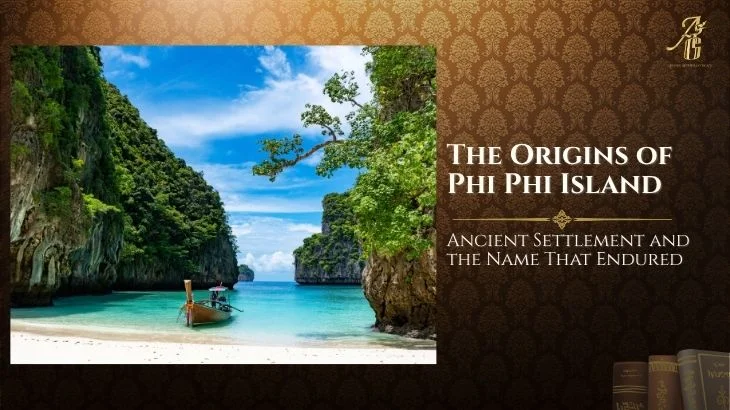
Phi Phi Island is, to most of the world, a postcard. Turquoise water. Limestone karsts. White sand. A shoreline so beautiful it seems designed rather than formed. But beneath the surface of every photograph, every Instagram post, every travel guide that describes Koh Phi Phi as a paradise, there is a history that is far more layered, more resilient, and more remarkable than the scenery alone suggests.
The history of Phi Phi Island spans centuries of human settlement, decades of transformation, a moment of global fame, a devastating catastrophe, and one of the most extraordinary recoveries ever witnessed on a small island. To understand Phi Phi Island today, its beauty, its culture, its spirit, you must first understand the story of how it came to be.
The same limestone caves that shelter extraordinary marine life also sheltered the earliest human inhabitants of these waters. And the same natural beauty that draws millions of visitors today is what first drew the seafarers who gave Phi Phi Island its name.
The Origins of Phi Phi Island Ancient Settlement and the Name That Endured
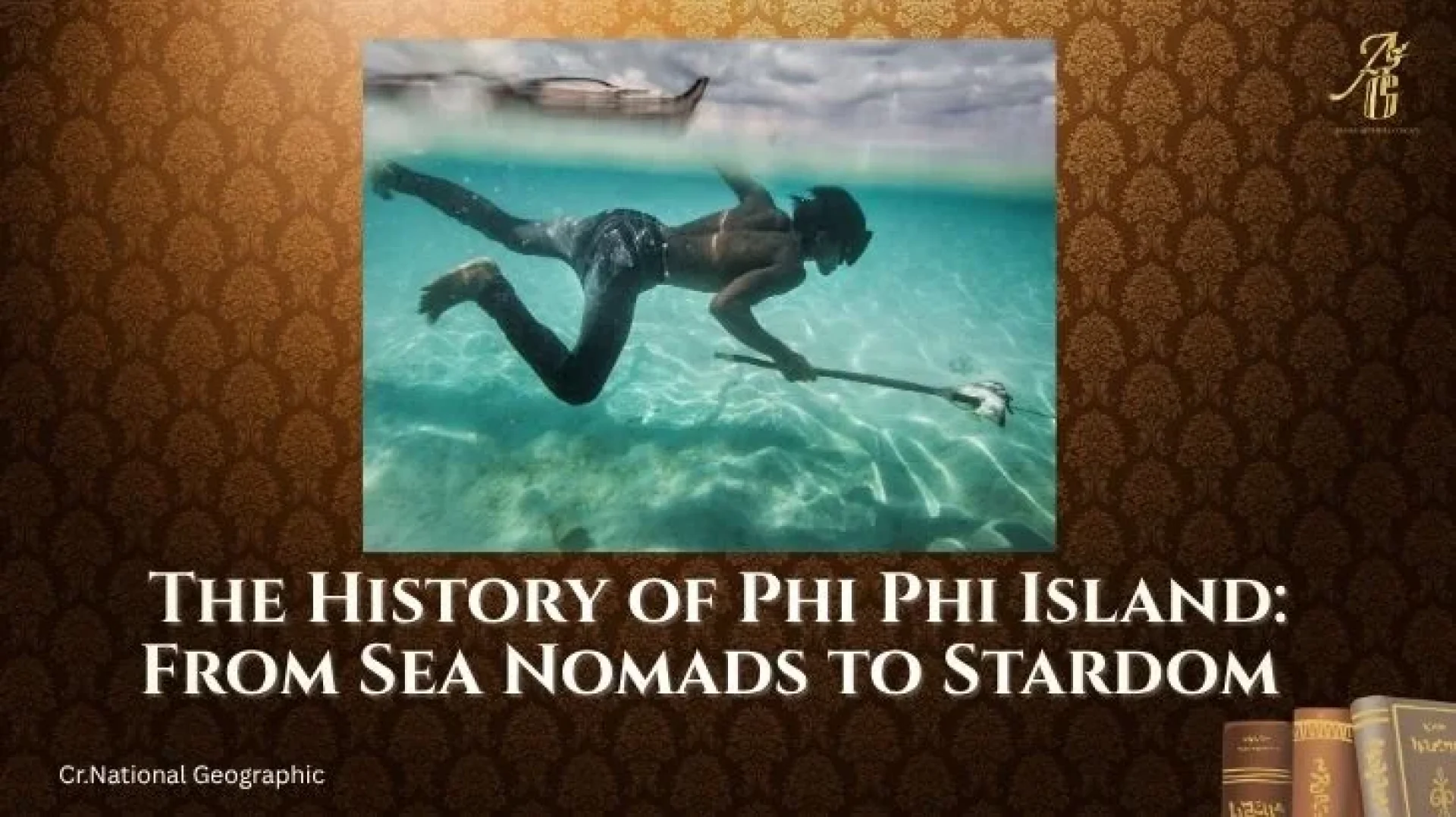
The name 'Phi Phi' is believed to derive from the Malay words 'Pulau Pi Api' meaning 'Island of the Pi Api Tree', a species of coastal pine tree native to the region. This etymology reveals something important about the history of Phi Phi Island: its earliest inhabitants were not Thai but Malay-speaking seafarers, likely the Chao Leh or Sea Nomads, who navigated the Andaman Sea long before any nation-state claimed these shores.
The Chao Leh known also as Moken or Sea Gypsies were among the first peoples to settle in and around the Phi Phi Islands. Their intimate knowledge of these waters, its currents, its fish, and its seasons, was the foundation upon which all subsequent human activity on the island was built. They came to shelter during the monsoon season, using the natural harbour of what is now Tonsai Bay as a refuge, returning season after season until the island became part of their ancestral memory.
These early communities built lightly and lived closely with the natural environment. But their presence is woven into the character of Phi Phi Island in ways still felt today: in the fishing traditions, in the relationship between the community and the ocean, and in the cultural identity of an island that has always belonged, first and foremost, to the sea.
Viking Cave Where Phi Phi Island's Ancient History Is Written on the Walls
Among the most tangible physical connections to the ancient history of Phi Phi Island is Viking Cave on Koh Phi Phi Leh. The cave earned its name from paintings found on its walls, believed by archaeologists to have been made by seafarers centuries ago, depicting the vessels that once navigated these waters.
But Viking Cave is not only an archaeological site. It is also the location of one of the oldest economic traditions on Phi Phi Island: the harvesting of edible swiftlet nests from the cave ceiling. Swiftlets build their nests from solidified saliva high on the cave walls; these nests, prized in Chinese culinary tradition, have been carefully harvested by local families for generations under a tightly managed system.
To visit Viking Cave is to encounter a practice that predates the first tourist, the first resort, and the first photograph taken on Phi Phi Island. It is living history, still practised, still meaningful, still bound to the same limestone rock that sheltered its earliest visitors.
The Discovery Era How the World Found Phi Phi Island
The Backpacker Years: 1980s
The modern history of Phi Phi Island as a tourist destination begins in the 1980s, when backpackers, mostly European travellers seeking islands not yet discovered, began arriving on Koh Phi Phi Don. There were no resorts and no modern infrastructure: just simple bungalows, the fishing community of Tonsai Village, and one of the most beautiful landscapes those early travellers had ever encountered.
Word spread slowly, as it did before the internet, through letters home, through conversations in Bangkok guesthouses, through dog-eared travel guides listing Phi Phi as somewhere to visit before it got too popular. For a brief window in the 1980s, that is exactly what it was: a secret known to those willing to seek it.
The Resort Era: 1990s
The 1990s transformed Phi Phi Island fundamentally. As tourism across southern Thailand expanded, Koh Phi Phi evolved rapidly from backpacker escape to mainstream destination. Resorts were built. Dive schools opened. Restaurants, bars, and tour operators multiplied. By the late 1990s, Phi Phi Island was no longer a secret, it was one of Thailand's most visited, most photographed destinations.
The Beach (2000), How a Film Put Phi Phi Island on the World Map
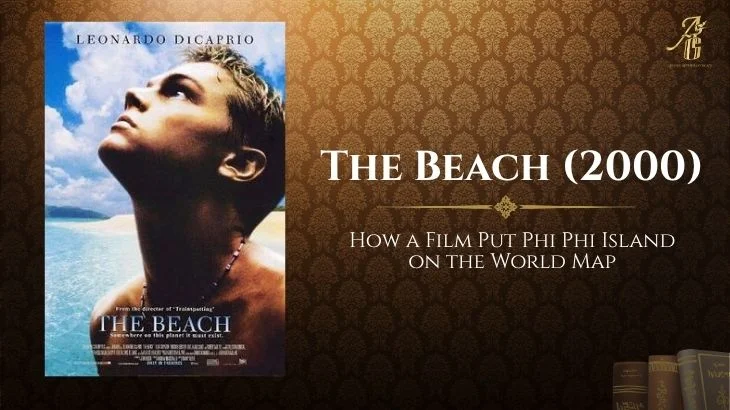
No single event in the modern history of Phi Phi Island had a greater impact than the filming and release of The Beach in 2000. Directed by Danny Boyle and starring Leonardo DiCaprio, the film was shot in significant part at Maya Bay on Koh Phi Phi Leh, and its release made Maya Bay one of the most recognisable beaches in the world overnight.
Travellers who had seen the film arrived at Phi Phi Island not simply to holiday but to experience the specific landscape that had captivated a global audience. The number of visitors to Koh Phi Phi surged. Maya Bay became the definitive image of tropical paradise for an entire generation.
The legacy of The Beach on Phi Phi Island is complex. It brought extraordinary global attention to an island that deserved to be seen, and also brought ecological pressure that contributed to a conservation crisis. Maya Bay was temporarily closed in 2018 to allow its severely damaged reef to recover. Today it has reopened under strict visitor management, with numbers controlled and boat access regulated.
Phi Phi Island Today Conservation, Community, and the Andaman Future
Phi Phi Island is today a part of Hat Noppharat Thara–Mu Ko Phi Phi National Park, one of Thailand's most protected marine environments. Conservation is no longer an afterthought on Koh Phi Phi, it is embedded in how the island is managed, how tourism is conducted, and how the community thinks about its relationship with the natural world.
Visitor limits have been introduced at the most sensitive sites. Coral reef restoration programmes are active in the surrounding waters. The closure and careful reopening of Maya Bay demonstrated that Thailand and the local community are willing to make difficult decisions in service of long-term ecological health. Phi Phi Island today is more aware, more regulated, and more consciously sustainable than at any previous point in its modern history, and it remains, for all of that, breathtakingly beautiful.
Experiencing Phi Phi Island Today Where History Meets the Present
To visit Phi Phi Island now is to move through layers of history at every turn. The limestone cliffs that fishermen navigated centuries ago are the same ones kayakers paddle beneath today. The cave where ancient seafarers left their paintings still opens to the sea. The best ways to experience this depth:
- Visit Viking Cave to encounter the living tradition of nest harvesting and the boat paintings on the cave walls
- Kayak along the coastline of Koh Phi Phi Don, following routes that Chao Leh seafarers first traced centuries ago
- Take an early morning boat to Pileh Lagoon and experience the stillness of a place that has barely changed in a thousand years
- Climb to Phi Phi Viewpoint at dusk for a panoramic view that encompasses the island's entire geography
- Visit Maya Bay and understand, standing there, why a filmmaker chose this exact place to represent the idea of paradise
As Good Restaurant Where Phi Phi Island's Story Continues at the Table
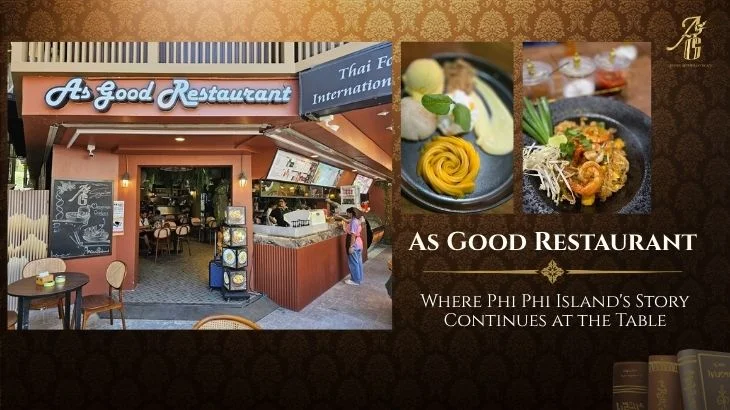
Every island with a history as rich as Phi Phi's deserves a place where that history can be tasted, where the culture, the heritage, and the spirit of the community find expression in food. On Koh Phi Phi, that place is As Good Restaurant.
Led by Chef Mod, an internationally recognised culinary competitor and champion of authentic Thai cuisine, As Good Restaurant is the finest dining experience on Phi Phi Island. Built on the philosophy of the Thai Samrub tradition, dishes prepared with meticulous attention to balance, technique, and the integrity of every ingredient, As Good is where the culinary soul of Thailand meets the extraordinary setting of Koh Phi Phi.
Just as Phi Phi Island exists in the space between its ancient roots and its modern identity, As Good Restaurant exists in the space between tradition and the present moment: honouring what has always been true about Thai cuisine while welcoming every guest, whatever their background.
A Menu That Welcomes Every Traveller
As Good Restaurant offers two menus that reflect the island's own character of authenticity and openness. The Authentic Thai Menu presents dishes rooted in traditional Thai culinary heritage, bold, complex, and completely uncompromised, for guests who wish to experience the full depth of Thai food on Phi Phi Island. The International-Friendly Menu offers the same premium ingredients and culinary philosophy, with flavours thoughtfully calibrated to welcome all palates.
Whether you come to Phi Phi Island for its history, its beaches, its diving, or its culture, end your day at As Good Restaurant. It is, in its own way, part of the story of what Phi Phi Island has always been: a place of beauty, depth, and experiences that stay with you long after the boat takes you home.
Plan Your Phi Phi Island Visit And Reserve Your Table at As Good Restaurant
The history of Phi Phi Island is not separate from the experience of visiting it. It is an experience. The cave paintings, the fishing traditions, the film that made Maya Bay famous, the community that rebuilt after the tsunami, all of it is present in the island you are about to step onto.
Come ready to look beyond the postcard. And when the day is done when you have seen the lagoon, walked the beach, and watched the sun set over the Andaman Sea, come to As Good Restaurant. Your table is waiting.
As Good Restaurant — Phi Phi Island
Open daily 10:00 – 00:00 | Last Order 23:30
Connect With As Good Restaurant
WhatsApp: https://wa.me/message/QIGQ5ULZIJH2H1
Facebook: https://www.facebook.com/AsGoodRestaurant
Instagram: https://www.instagram.com/asgood_restaurantandcafe/
TikTok: https://www.tiktok.com/@asgoodrestaurantandcafe
YouTube: https://www.youtube.com/@as-goodrestaurant